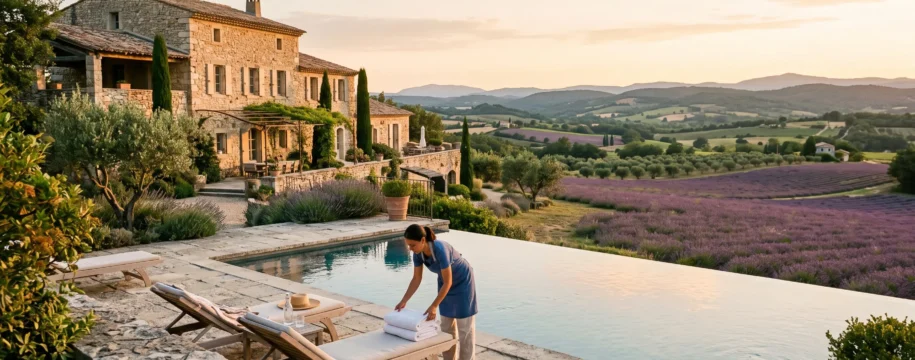
Direct answer: A truly exceptional luxury villa holiday in France is defined by verifiable quality (build and comfort), a setting that delivers privacy and atmosphere, services you can clearly confirm (what’s included vs optional), and booking terms you fully understand before you pay.
When you’re comparing high-end villa listings, the problem isn’t the lack of “beautiful photos”. It’s that many descriptions use the same luxury vocabulary while the on-site reality can vary a lot.
This article gives you a practical way to judge what makes a villa genuinely exceptional in France—using concrete checks you can apply before booking, rather than vague promises. You’ll also see how official classification can help set expectations, and where it has limits for private villas.
Your luxury villa checklist (use it before you book)
- Setting: privacy, noise levels, views, outdoor living space, and practical access (shops, beaches, villages).
- Comfort: bedrooms/bathrooms quality, climate control, kitchen standard, and maintenance signs in recent photos.
- Services: what’s included (housekeeping, pool/garden care) vs what costs extra (chef, concierge hours, chauffeurs).
- Trust: consistent photo sets, clear inventories, verified reviews, and an owner/agency willing to answer precise questions.
- Terms: deposits, security deposit, check-in/out, cancellation, and what happens if something breaks.
What Defines a Luxury Villa Holiday in France?
A luxury villa becomes “exceptional” when luxury is not just décor—it shows up in repeatable standards you can check: privacy that’s real (not “private” in name only), comfort in every room (not just the living area), and operational quality (cleaning, maintenance, responsiveness) that prevents small issues from ruining an expensive trip.
In France, you may also come across official classifications for furnished tourist rentals (“meublés de tourisme”). They can help you compare minimum equipment and service expectations when a villa is actually classified, but they are not automatic for every property and shouldn’t replace your own verification.
For a reliable reference point, you can look at the French official accommodation classification framework, which explains the purpose of the star rating approach as an information tool for clients (and notes it is voluntary).
What makes “real luxury” different from marketing?
Marketing language is easy to copy; operational quality is harder to fake. “Exceptional” usually means the listing answers detailed questions upfront: room-by-room descriptions, clear boundaries of the property, what you can and can’t do (events, quiet hours, pets), and exactly what support exists during your stay.
If the listing is heavy on adjectives (“exclusive”, “prestige”, “unique”) but light on specifics (bed sizes, number of bathrooms with showers vs baths, air conditioning zones, Wi‑Fi quality, parking), treat it as a signal to dig deeper rather than a guarantee.
Villa vs other high-end stays in France: what are you paying for?
A villa typically earns its premium through space, privacy, and control: you set the pace, you’re not sharing pools or breakfast rooms, and you can host a multi-generation group without living on top of each other. In a hotel, the luxury may come more from on-site staff, restaurants, and predictable standards.
One more nuance: tourism demand in France fluctuates with seasons and travel patterns, so availability and pricing can shift quickly. For context on wider market movement, Insee notes that France’s tourist accommodation frequentation reached France’s tourist accommodation frequentation 210.9 million overnight stays in Q3 2025, up 2.9% year-on-year (source: Insee, 20 November 2025). This doesn’t predict villa prices, but it’s a reminder to double-check what you’re comparing (dates, region, included services).
- If your priority is privacy and group comfort:
Choose the villa that proves space distribution (bedrooms/bathrooms) and outdoor layout with consistent, recent photos.
- If your priority is effortless service:
Choose the offer that clearly lists service frequency (housekeeping, pool care) and provides a reachable on-site contact.
- If your priority is “no surprises”:
Prefer listings that share an inventory, clear rules, and written booking terms before payment.
Location and Setting: Why the Surroundings Make the Difference
The same villa interior can feel completely different depending on its setting. In France, “exceptional” often comes from the combination of privacy, atmosphere, and access—what you see, hear, and do the moment you step outside.
Start by translating “great location” into checks: What are the closest neighbours? Is there road noise? How long is the drive to a bakery, a market, or a beach? Does the outdoor space face sunset—or the parking area of another property?
Which setting details matter most for the villa experience?
Three elements tend to change the experience dramatically: noise (roads, nightlife, nearby construction), privacy (overlooked pool areas, shared access roads), and orientation (sun exposure, wind, shade). These aren’t “nice-to-haves” when you’re paying a premium; they’re the difference between relaxing and constantly adapting.
Outdoor living space is part of the product. A private pool, terraces, shaded dining, and a garden that’s actually usable (not just decorative landscaping) can be worth more than an extra indoor lounge you’ll barely use in summer.
Should you choose countryside seclusion or village proximity?
Neither is universally better; the luxury is choosing the friction you can live with. A secluded countryside villa may give you silence, dark skies, and uninterrupted views—at the cost of longer drives and fewer spontaneous dinners out.
A villa near a village can feel more “French holiday” day-to-day: morning bakery runs, walkable cafés, local markets. The trade-off can be more passing traffic, less land, or neighbours closer than the photos suggest.
Cas pratique
You’re choosing between two villas in the South of France for the same week. Villa A is isolated with a wide valley view, but the nearest supermarket is a long drive and the access road is narrow. Villa B is a short walk from a village, with smaller grounds but easy restaurant options. If your group includes kids or grandparents who may not want daily car rides, Villa B can feel more “luxury” in practice—even if Villa A looks more spectacular online.
- If you want total switch-off:
Prioritise distance from roads and neighbours, and confirm outdoor privacy around the pool.
- If you want local life:
Prioritise walkability or short driving times to a village, and confirm parking practicality.
- If your group will split activities:
Choose the location that makes logistics easy (multiple cars, safe routes, simple meet-up points).
Services and Amenities Worth Expecting
A high-end villa isn’t defined by a single “wow” feature. It’s defined by frictionless living: comfort that holds up over a full week, and support that prevents small problems (trash, towels, pool issues, broken appliances) from becoming your job.
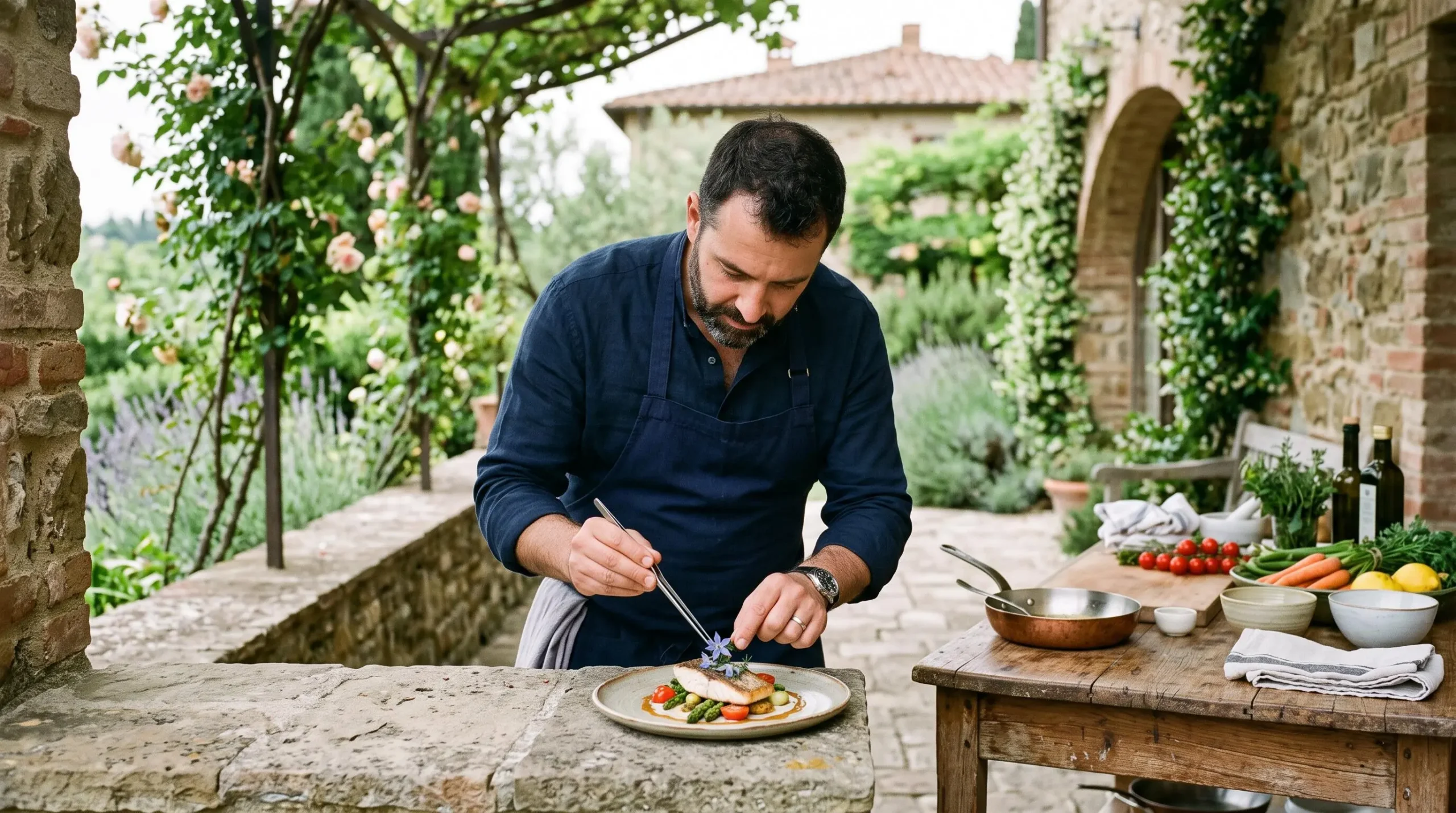
Before you assume something is included, treat every service as a line item to confirm. Luxury offers often combine included basics (maintenance, cleaning schedule) with optional add-ons (chef, driver, spa treatments).
Which services genuinely justify a premium price?
Look for operational services that protect your time: scheduled housekeeping, linen/towel management, pool and garden maintenance, and a clear point of contact if something breaks. These aren’t glamorous, but they’re what keep the stay running smoothly.
Concierge support can be valuable when it’s defined: what hours, which requests are realistic, and whether they can arrange local experiences without vague “we can do anything” promises.
Which amenities are worth checking room by room?
Exceptional villas tend to be consistent: bedrooms that feel as strong as the main living space, bathrooms that match the guest count, and climate comfort that’s not limited to one area. Ask specifically about air conditioning or heating coverage (which rooms), blackout options, and whether every bedroom has a comparable bathroom setup.
The kitchen is another tell. “Fully equipped” can mean anything, so check what matters for your group: oven capacity, fridge space, coffee setup, dishware volume, and whether the layout works if you plan to cook or bring in a chef.
| Criterion | Typical standard rental | Exceptional luxury villa (verifiable signs) |
|---|---|---|
| Photo evidence | Highlights best angles; fewer “everyday” rooms | Consistent, room-by-room coverage; outdoor privacy shown clearly |
| Bedrooms & bathrooms | Comfort varies between rooms | Comparable standard across rooms; clear bathroom count and layout |
| Services | Basic handover; limited support | Defined housekeeping/maintenance schedule; clear contact process |
| Inventory & rules | Short description; missing practical details | Written inventory, house rules, and clear check-in/out expectations |
| What’s “included” | Ambiguous | Separated list of included vs optional (and when fees apply) |
- If services are vaguely described:
Request a written list of what’s included, how often it happens, and what costs extra.
- If your trip is a celebration:
Confirm early what is allowed (events, extra guests, quiet hours) to avoid last-minute restrictions.
- If you want zero admin:
Prioritise offers with an on-site or clearly reachable local manager and defined response process.
How to Evaluate a Villa Offer Before Booking?
To avoid paying a premium for mediocre reality, don’t “trust your gut”—trust cross-checks. Your goal is to turn luxury claims into proof: official classification when available, verified reviews, consistent photos, and booking terms you can understand in one read.
- Check whether an official classification exists
If the villa is a “meublé de tourisme” with a star rating, ask for the classification details and validity. The French system is presented by the government as an information tool for clients, and it is voluntary—so the absence of a rating isn’t proof of low quality, but a rating can provide a structured baseline when it exists.
- Ask for a written “included vs optional” list
Confirm cleaning frequency, linen/towel changes, pool heating (if relevant), garden/pool maintenance, and any concierge availability. Make sure you know what triggers extra charges.
- Audit the photo set for consistency
Look for: same flooring/finishes across angles, daylight variation that suggests real shoots (not stitched imagery), and coverage of “unsexy” areas (bathrooms, parking, entrances). If key zones are missing, ask for recent additional photos.
- Use reviews carefully—and verify what you can
Prioritise reviews that mention operational facts (cleanliness, responsiveness, noise) rather than just “amazing stay”. If reviews are hosted on a platform, check they are marked as verified according to that platform’s process.
- Read pricing, deposits, security deposit, and cancellation terms end-to-end
Don’t assume. Ask what is refundable, what counts as damage, and when funds are due. Prices and availability are always indicative—confirm them in writing with the owner or agency before you pay.

How can official classifications help, and what are their limits?
If a villa is classified as a furnished tourist rental, France uses an official criteria grid managed by Atout France. The grid sorts requirements into mandatory, optional (“à la carte”), and non-compensable mandatory criteria—useful structure when you want to compare what’s formally assessed.
You can consult the official Atout France classification grid to see how criteria are organised. Limit: classification is not a full promise of “exceptional design” or “perfect staff”—it’s one verification layer, not the whole story.
What should you ask about pricing, deposits, and cancellation?
Ask for the payment schedule and definitions in plain writing: what they call a deposit, what is refundable, what the security deposit covers, and what the cancellation policy means at each stage. If something is unclear, request a clarification before sending funds.
Terms you don’t understand are a red flag: if the owner/agency can’t explain deposits, security deposit, and cancellation in writing, assume you may face surprises later.
Which questions quickly reveal if an offer is trustworthy?
Use questions that require specific answers, not opinions. Examples: “Which bedrooms have en-suite bathrooms?” “Is the pool heated, and is that included or extra?” “Who is the local contact, and what are their typical response hours?” “When were the photos taken?”
A reliable offer doesn’t need to be perfect—it needs to be transparent. If you get consistent, documented answers, you’re much more likely to get the experience you’re paying for.
- If answers are precise and consistent:
Move forward—then re-check that the contract matches what was promised (services, fees, rules).
- If answers are slow but complete:
Keep comparing availability, but don’t penalise caution; thoroughness often correlates with better operations.
- If answers are vague or contradictory:
Walk away. Luxury pricing without verifiable clarity is a high risk of disappointment.
Exploring Alternative Outdoor Stays for Your Next Trip
If what you want is nature, space, and a change of pace, a villa isn’t your only high-end option in France. Upscale outdoor stays—depending on the destination—can offer comfort plus a more immersive setting, sometimes with shared facilities but strong on convenience.

Which outdoor formats can still feel “high-end”?
Depending on the region, you’ll find premium campgrounds, lodges, and glamping-style tents that focus on bedding comfort, private terraces, and on-site services. The experience is different from a private villa (less privacy, more shared life), but it can be a better fit if you value activities, location convenience, and a managed environment.
If your outdoor priority is gear-driven (space, weather handling, family layout), independent tent reviews can help you compare options before you commit to an outdoor stay format.
Villa vs upscale camping: how to choose for the same destination?
A villa usually wins on privacy, private pool potential, and “live like it’s your home” freedom. Upscale camping often wins on built-in amenities (kids’ clubs, on-site food options, activities) and simpler logistics—especially if you don’t want to drive every day.
Whichever you choose, apply the same discipline: verify what’s included, how quiet it is at night, and how the place handles practical issues (maintenance, cleanliness, support).
How can I tell if a luxury villa in France is really worth it?
It’s “worth it” when the premium is backed by verifiable reality: consistent room-by-room photos, clear outdoor privacy, defined service schedules (housekeeping, pool care), and written booking terms you understand. If the listing relies on adjectives but avoids specifics, treat it as marketing until proven otherwise.
What services should a top-end villa include?
At minimum, expect defined operational support: cleaning frequency, linen/towel handling, pool/garden maintenance, and a reachable local contact. Concierge and chef services can be excellent, but they should be clearly described as included or optional with conditions.
How do I check that a villa listing is trustworthy?
Cross-check details: ask when photos were taken, request a written inventory, verify who manages the property locally, and read reviews that mention operational facts (cleanliness, responsiveness, noise). Trust increases when answers are specific, consistent, and provided in writing.
If you want to book a luxury villa holiday in France with confidence, keep one principle in mind: every luxury claim should translate into something you can verify—about the setting, the services, the rules, and the terms. That’s how you protect your budget and maximise the chances of the stay matching the promise.